

The Cursed Object Aisle
A Trip Through Vide-Greniers

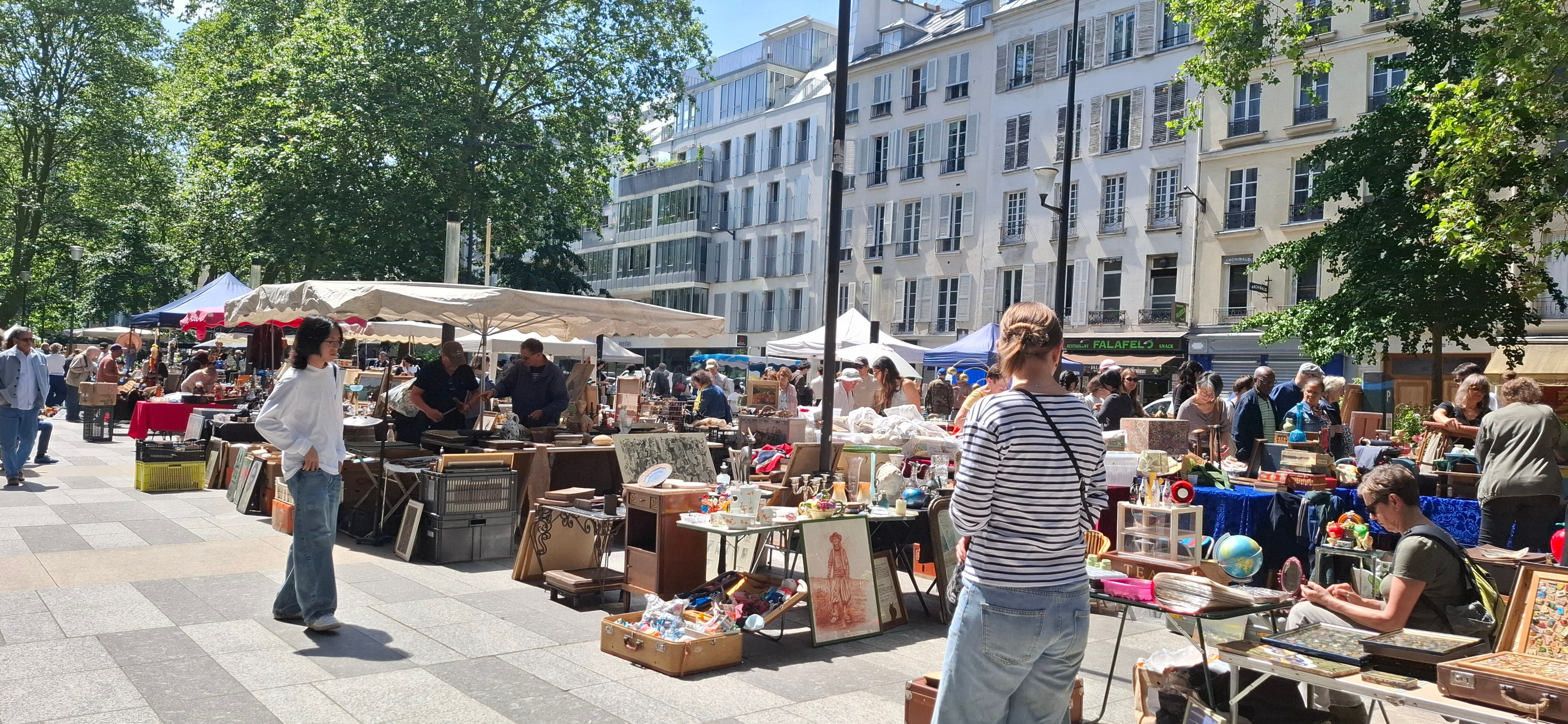
Every fantasy reader knows the scene. A cluttered stall, an old woman with too many rings, an object priced far too low. The hero buys it anyway. Three chapters later, someone is dead or in love or both.
Franch towns runs this scene every Sunday from spring to early autumn, roughly fifty thousand times a year. It’s called a vide-grenier, literally “attic emptying,” and it is the closest thing the real world offers to the market where quests begin.
A vide-grenier belongs to amateurs who registered at the town hall and signed a sworn statement that they’re selling only their own used belongings (the law caps them at two sales a year), and paid a few euros for a couple of meters of pavement. The whole village or town turns into a bazaar for one day. Church square, main street, the car park behind the bakery. Then it vanishes.
Fantasy has used it forever, goblin markets, hidden alleys, fairs that appear at the crossroads once a century, but the vide-grenier proves you need no magic for it. You need a mayor’s signature and a hundred families with clutter.
Most of what’s sold are clothes, or household items. But you may also find: a single cavalry spur. A box of keys with the locks long gone. Photo albums of people nobody can name anymore. Old tools whose purpose died with the trade that used them.
It feels like walking through the memory of a place rather than through anyone’s garage.
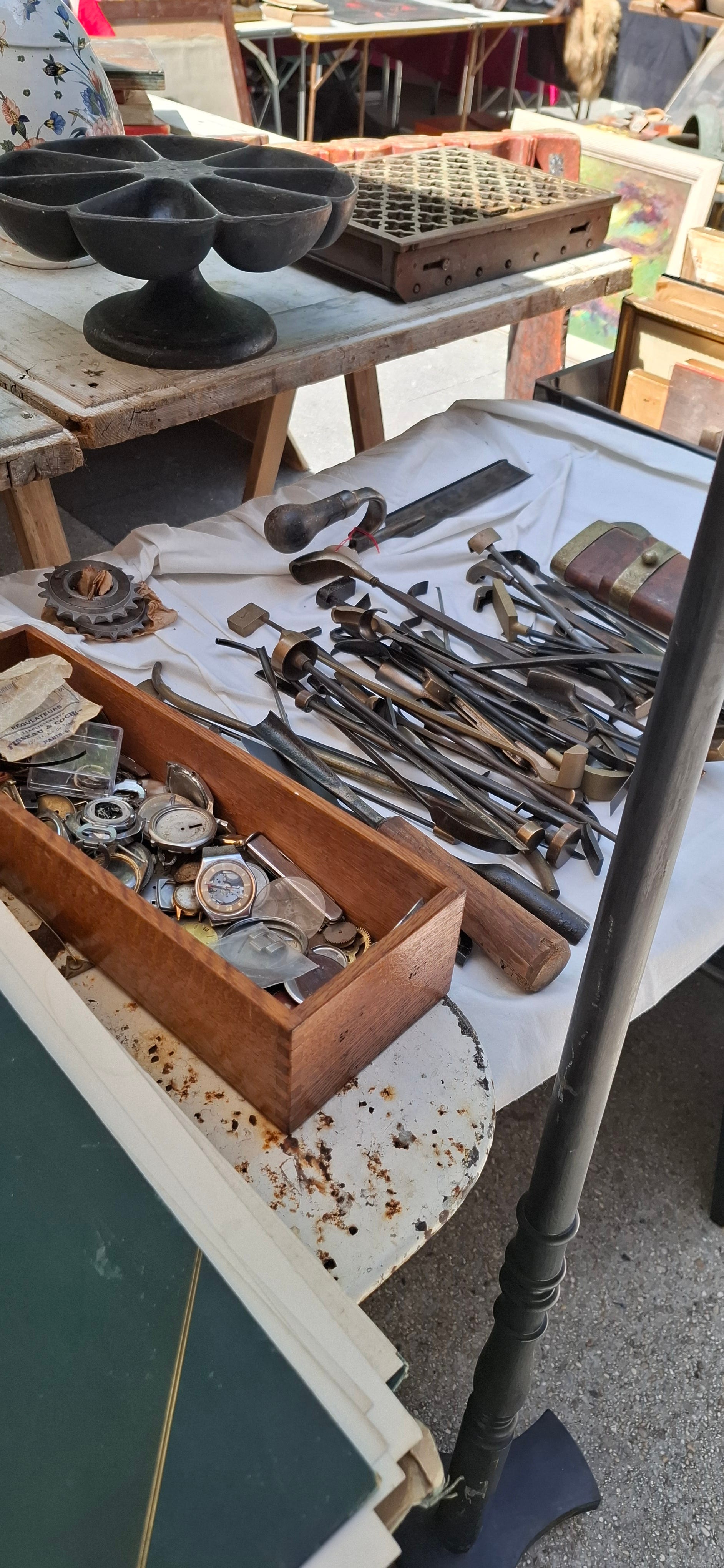
For a writer who likes to see the gears, this is a masterclass in worldbuilding through objects. You might learn a dead man’s whole life from what his heirs won’t keep. The military medals go for less than the Tintin albums. Someone kept every receipt from 1962.
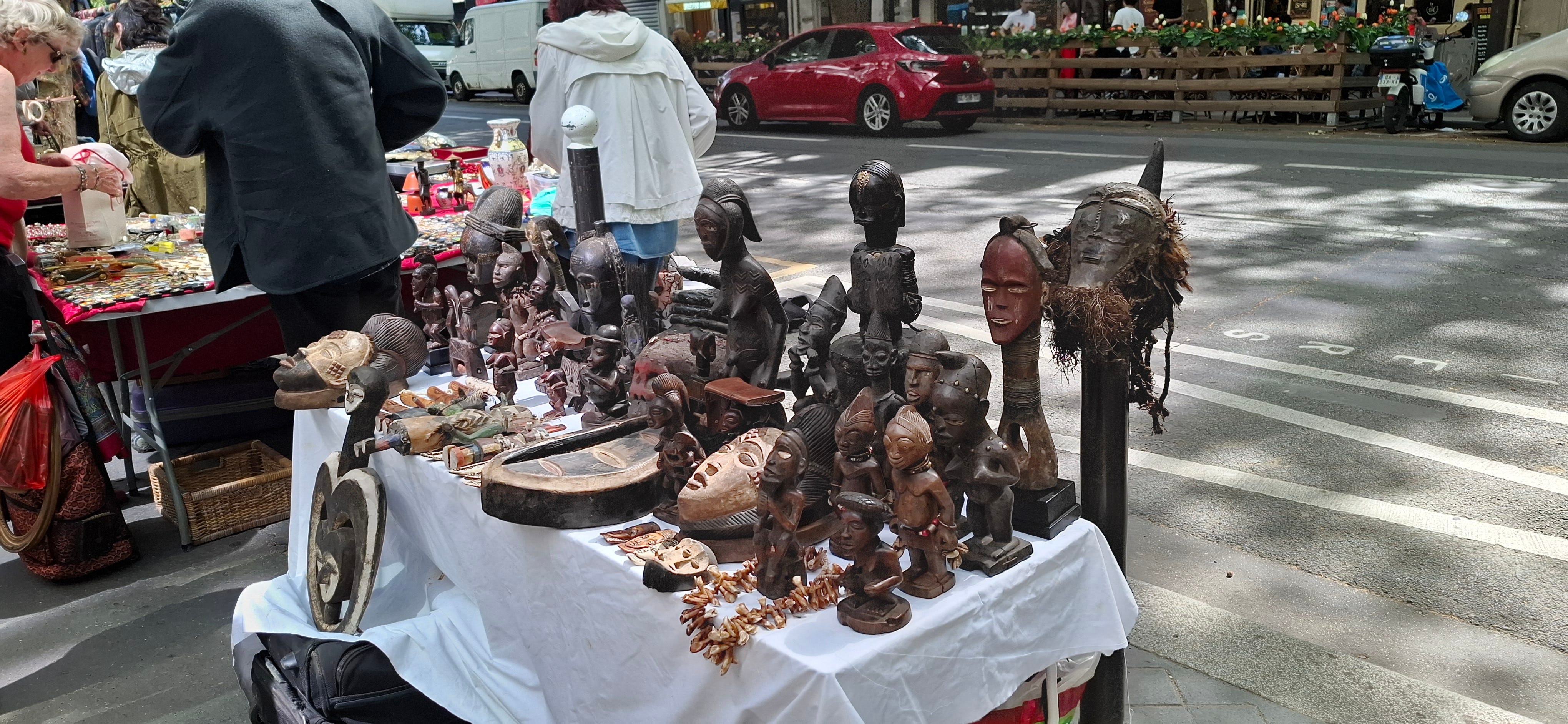
The standard fantasy market scene fails because everything in it was invented to be sold to the protagonist. Real junk sales teach the opposite lesson: 99% of everything is chipped Pyrex and children’s clothes. The strange thing hides among the ordinary things, and the seller has no idea it’s strange. The astrolabe sits next to the salad spinner. And forget the mysterious guardian, the vendor is a retired postman who wants the table cleared by four so he can watch the football match. He’ll take three euros for the magic artifact. He’ll throw in the salad spinner.
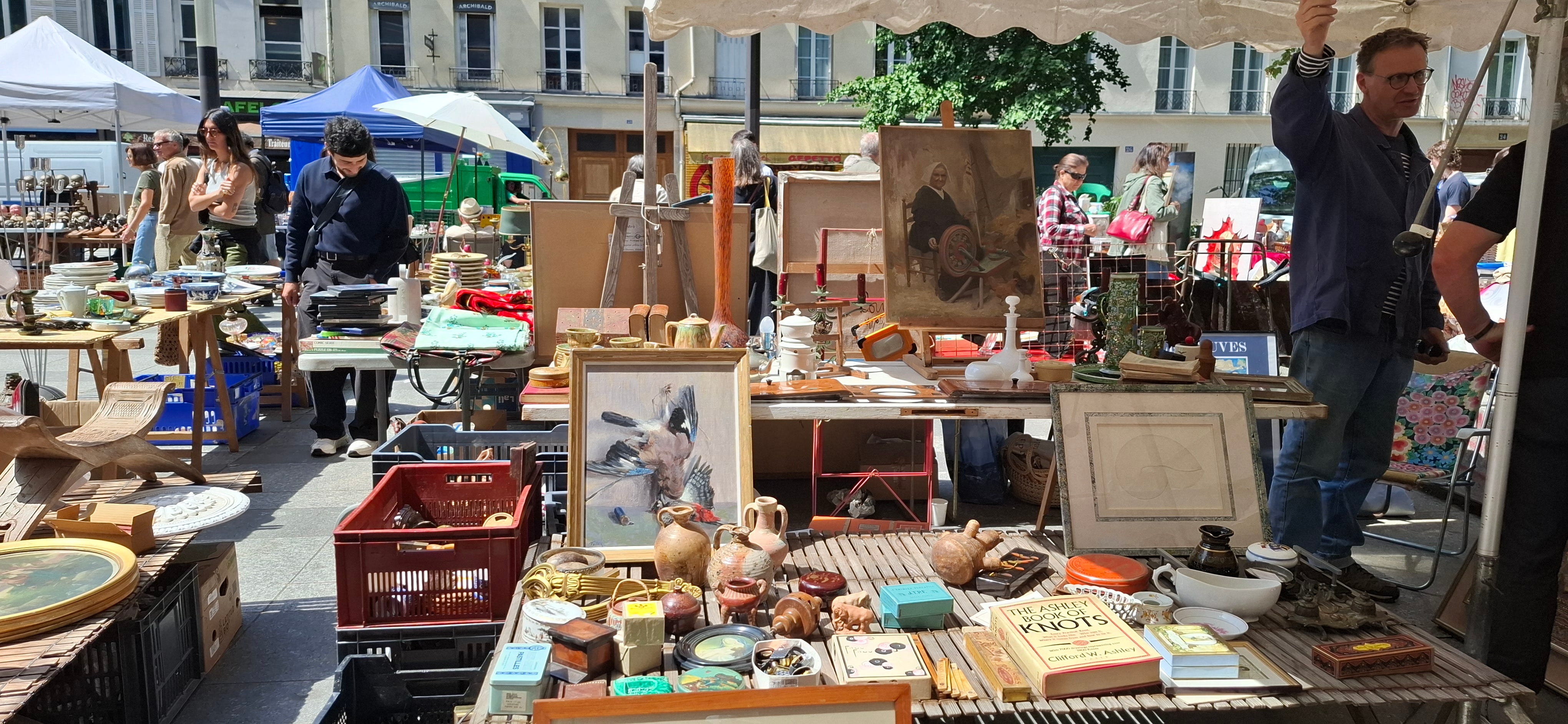
Then there’s the haggling, which fantasy usually writes as an awfully antagonistic exchange of figures. Any writer building a trade culture could spend a morning watching two pensioners fight over fifty centimes and then share a coffee. The one real sin is the brutal lowball on grandmother’s Sèvres soup tureen.
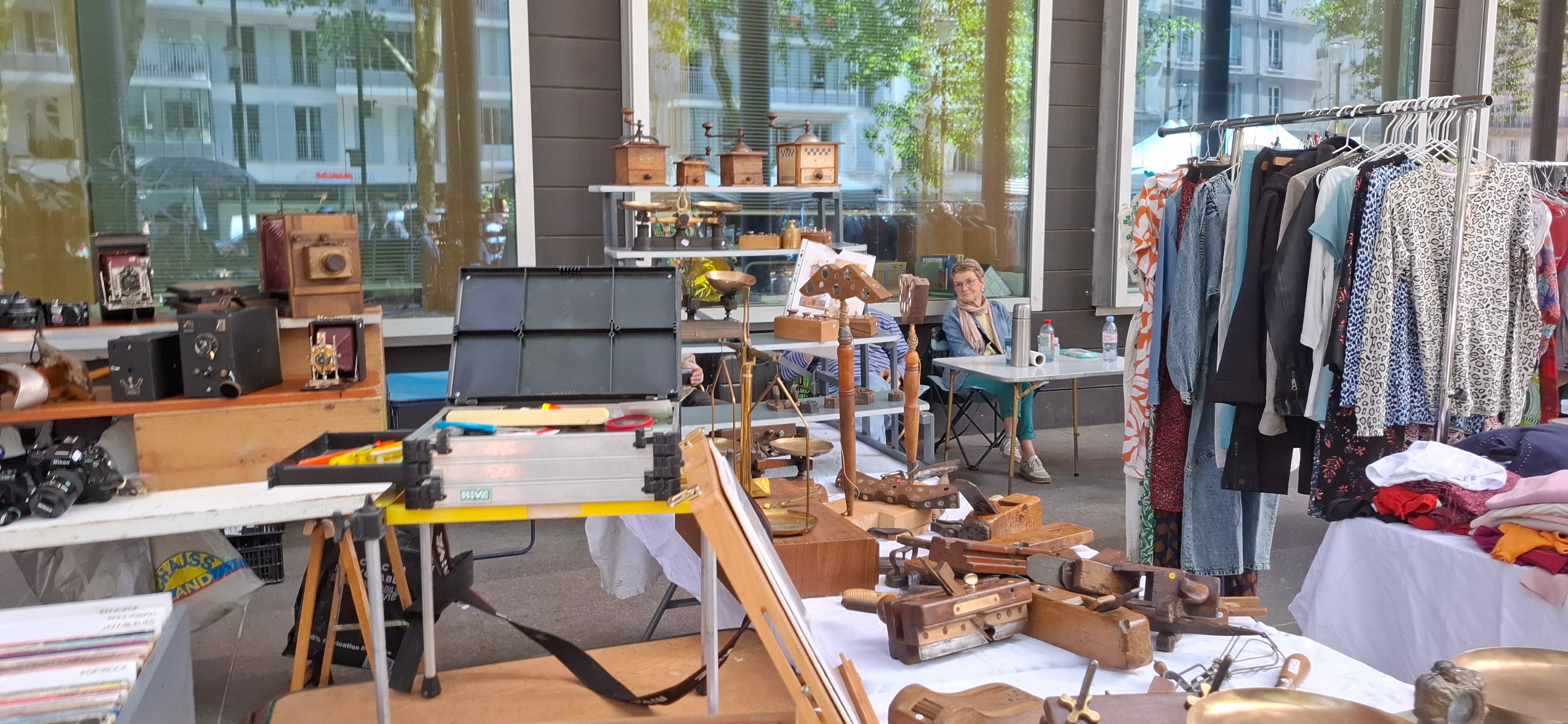
The serious bargain hunters, often professional antique dealers, sweep the tables with flashlights while the sellers are still unloading. Bring cash in small notes; nobody has change for a fifty at 7 a.m. Look under the tables, that’s where the boxes nobody bothered to sort end up.
And if you find it, the object, the one with the initials that almost match yours: buy it. Everyone knows how that story starts.
Nobody agrees on how it ends.
Till next time.
Alex